The cables from the Pentagon speak in the confident language of military advantage. The Iranian blockade, now more than two weeks old, has cost Tehran $4.8 billion in oil revenue. Forty vessels have been redirected. Fifty-three million barrels of crude sit stranded in the Gulf, their value hemorrhaging with each passing day. The Defense Department's messaging is crystalline: unrelenting pressure, devastating impact, the regime's ability to fund terrorism methodically dismantled. This is statecraft as economic siege, and by all conventional measures of military leverage, it appears to be working.
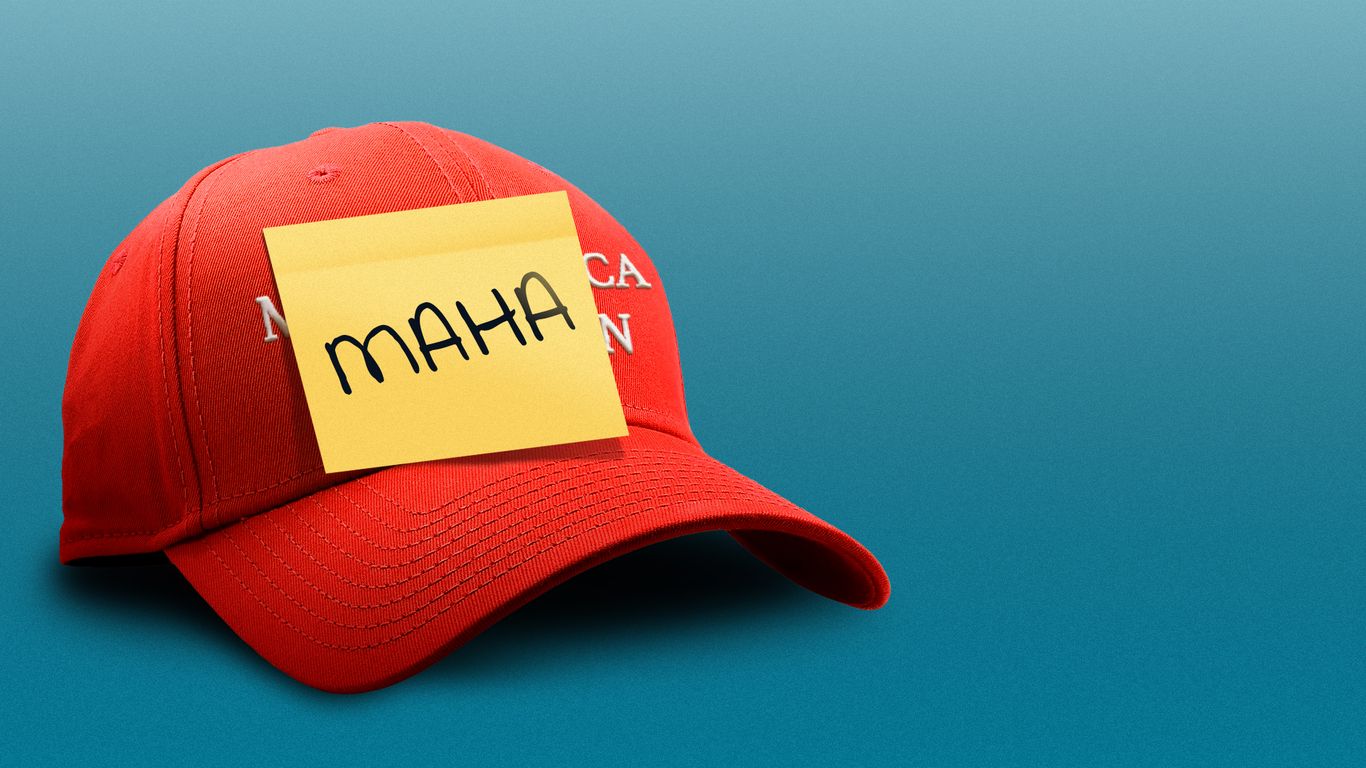
Yet within hours of the Pentagon's triumphant accounting of Iran's losses, the White House withdrew the nomination of Casey Means for surgeon general—a decision that reveals, with almost theatrical clarity, the fissures beneath the administration's facade of unified purpose. Dr. Means, aligned with Robert F. Kennedy Jr.'s "Make America Healthy Again" movement, could not satisfactorily answer whether she would encourage measles vaccinations. The Senate balked. The White House capitulated. And in that retreat lies a more troubling story than any blockade could tell: a government unsure of its own authority on matters of basic public health, caught between the demands of a popular movement skeptical of institutional expertise and the requirements of governing a complex nation.
This is the paradox that animates our current moment. America projects unprecedented confidence in its ability to coerce adversaries through economic siege and military dominance. Yet domestically, it struggles to articulate coherent positions on questions—vaccination, pesticide regulation, the citizenship status of Asian Americans—that have long been the settled business of democratic governance. The administration scores victories on both fronts, but the victories increasingly feel like they are being won in separate countries entirely.
The Blockade as Mirror
The Iran blockade deserves examination not merely as a military tactic but as a window into how this administration understands power itself. By all accounts, the operation is tactically sound. The Pentagon has identified an economic chokepoint and is applying methodical pressure. Storage facilities approach capacity. Oil wells face shutdown. The timeline to capitulation—"several weeks, or perhaps as much as a month," according to analysts—is being publicly discussed as though it were a controlled descent rather than a crisis.
But the blockade also reveals something else: a willingness to sustain indefinite conflict through economic strangulation rather than negotiated settlement. The talks "stop and start," as Axios notes, and the Pentagon's role is to make the pauses hurt. This is not necessarily illegitimate statecraft. Nations have always used economic pressure. Yet it is also a form of warfare that requires sustained public support, unified elite consensus, and clarity about the political objective. The Trump administration possesses the first of these. The second is increasingly doubtful. And the third remains spectacularly unclear.
Senator Todd Young, a Republican, has already signaled that future military action against Iran will require congressional approval. The War Powers Act, suspended once the ceasefire took effect, looms as a constraint the administration clearly resents. The message from the Pentagon—that the blockade will inflict "devastating" damage on Iran's ability to fund terrorism—is the message of a government preparing for a very long confrontation. But democracies cannot sustain such confrontations on executive will alone. Eventually, Congress must ratify them. Eventually, the public must accept the cost. The blockade appears economically devastating to Iran. Whether it is politically sustainable for America remains an open question.
The Surgeon General as Metaphor
The withdrawal of Casey Means's nomination reveals a different species of problem entirely. Dr. Means was not rejected because she lacked medical credentials. She was rejected because she could not be trusted to advocate for childhood vaccination—a position so straightforward that it seemed, until this moment, to require no special justification from a nominee for the nation's top medical officer.
That this became controversial speaks to the peculiar power of the "Make America Healthy Again" movement within Trumpist circles. The movement has genuine insights into problems of industrial food systems, chemical exposure, and corporate regulatory capture. The farm bill vote Thursday proved this, as MAHA-aligned members broke ranks to strip out pesticide liability language. There is a real constituency here, animated by real concerns about the safety and integrity of America's food supply.
But there is also something deeply disquieting about a health movement that cannot answer straightforward questions about vaccine safety for childhood diseases. Casey Means "tried to avoid being pinned down" on measles vaccination. In that evasion lies a tell: the movement's leaders know that explicit anti-vaccination positioning would be politically toxic, yet they also cannot bring themselves to endorse vaccination because to do so would violate the movement's core premise that institutional expertise is captured and corrupted. This is the logic of a movement that wishes to exercise power without accepting its responsibilities.
Nicole Saphier, the replacement nominee, presents a different problem. She promoted false claims about CDC vaccine mandates in 2022. Yet she will likely sail through confirmation because she is more conventionally credentialed and more cautious in her skepticism. The administration has outsourced its health governance to people who have demonstrated a willingness to amplify medical misinformation. This is not, technically, unprecedented in American politics. But it represents a threshold moment—the point at which the administration publicly accepts that its surgeon general will not be a figure of scientific authority but rather a translator of talking points for a base skeptical of scientific authority itself.
The Anxiety of Visibility
The STAATUS Index, released this week, captures something often overlooked in political coverage: the lived experience of communities navigating a government's shifting posture toward them. Forty-four percent of Asian Americans report high anxiety. This is not merely a polling artifact. It reflects the genuine precarity of people who have achieved measurable economic success yet face hardening public attitudes about their loyalty and their place in the national project.
More than one in five Americans believe Chinese Americans pose a threat to society. Nearly one in four believe Asian Americans are more loyal to another country than the United States. These are not fringe views. They are held by substantial minorities, amplified by an administration that has made competition with China a centerpiece of its foreign policy and immigration a centerpiece of its domestic governance. The administration is not responsible for these attitudes, but its rhetoric clearly resonates with and reinforces them.
What's striking is that recognition and success have not translated into safety or belonging. The visible elevation of Asian Americans in popular culture, in business, in academia has not been accompanied by genuine integration into the public's understanding of American identity. Instead, success has made Asian Americans visible in a way that invites scrutiny, suspicion, and the kind of loyalty tests once reserved for other moments of national anxiety. This is the paradox of model minority status intersecting with great power competition: the better Asian Americans do, the more they are perceived as foreign.
Governance Without Consensus
What emerges from this week's headlines is a portrait of an administration governing with considerable confidence but diminishing consensus. The Pentagon blockades Iran successfully. Congress cannot even agree on whether the War Powers Act applies. The administration's health officials navigate between scientific authority and movement skepticism, endorsing neither fully. States prepare to redraw congressional maps after the Supreme Court's narrowing of the Voting Rights Act, a decision that will reshape political representation without any meaningful democratic ratification.
These are not discrete problems. They are expressions of the same underlying condition: a political system in which the executive branch exercises significant power, the legislative branch fractures internally, and the public becomes increasingly skeptical of the institutions claiming authority over its health, its safety, and its place in the national community. The blockade works. The economy hums. The administration's approval rating has fallen to 40 percent.
This is a government that can project power abroad with remarkable efficacy. But it is struggling, with increasing visibility, to govern at home. That gap between external confidence and internal dissolution is the true story of this week's news. It is also, perhaps, the defining story of our era.