There are moments in American political life when the ground shifts beneath our feet so gradually that citizens scarcely notice until the landscape has fundamentally altered. Wednesday was not such a moment. The Supreme Court's 6-3 decision to weaken Section 2 of the Voting Rights Act was a thunderclap, unmistakable in its implications and immediate in its consequences. By strengthening states' ability to justify congressional maps on the basis of partisanship rather than race, the Court's majority has handed a gift to Republican legislatures across the South—and the wrapping paper is hardly concealing what's inside.
The decision strikes at what remains of the Voting Rights Act after the Court's previous gutting of Section 4 in 2013. It is, in the words of Congressional Black Caucus Chair Yvette Clarke, "devastating"—a term that carries weight because it comes not from partisan hyperbole but from those who have spent careers defending the franchise. Former Speaker Nancy Pelosi's laconic "It's not good" somehow manages to capture the gravity that understatement sometimes conveys more effectively than shouting.
What makes this moment particularly significant is not merely what the Court has done, but the speed and certainty with which the consequences are materializing. Republican legislatures in Alabama, Mississippi, Tennessee, and Louisiana are already preparing to redraw maps, breaking apart majority-minority districts that have served as bastions of Democratic representation. The intellectual architecture supporting this move—that partisan gerrymandering is distinct from racial gerrymandering, that states have broad latitude in mapmaking—may satisfy certain legal doctrines, but it obscures a deeper reality. In the American South, where voting patterns have historically tracked along both race and party, the distinction often collapses into fiction.
The Architecture of Disenfranchisement
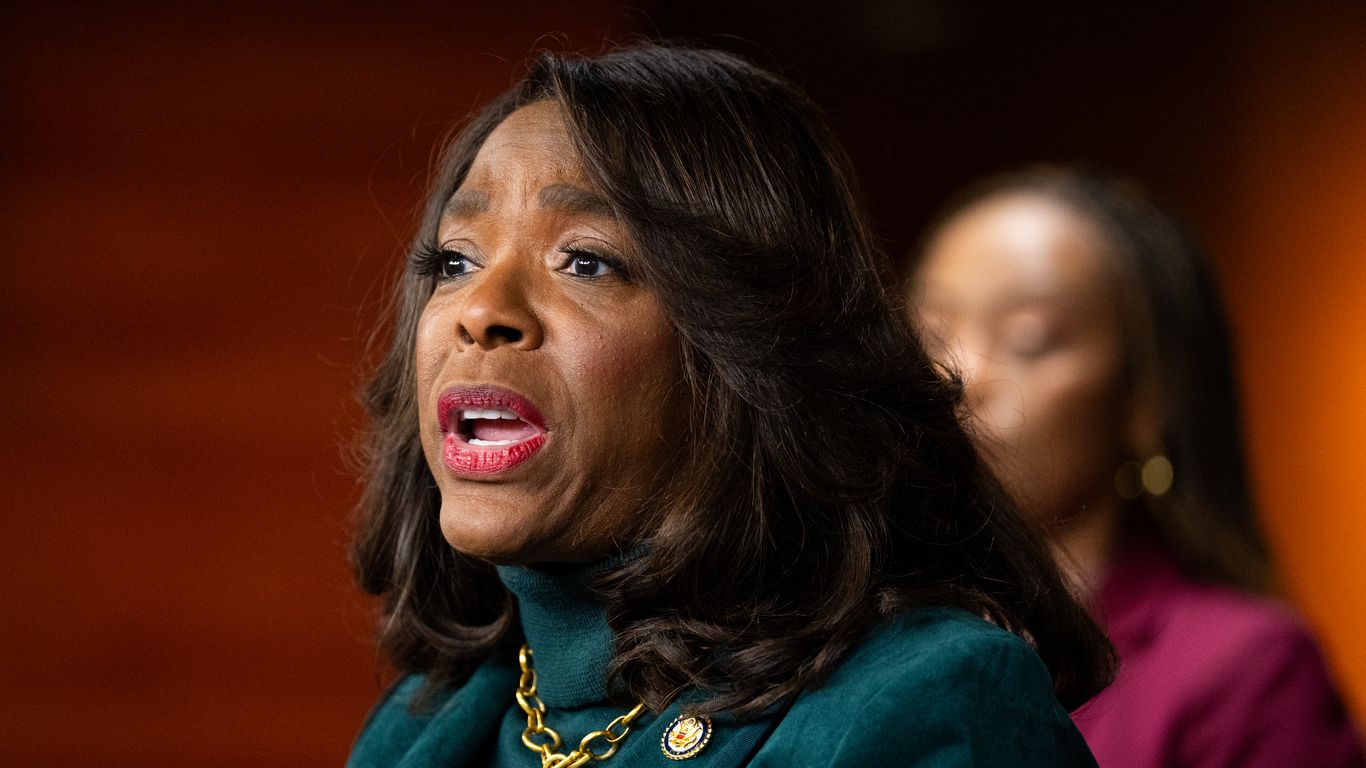
What demands our closest attention is not the Court's legal reasoning but its practical effect on democratic representation. The seven-seat loss projected for Democrats in the House this cycle represents more than electoral mathematics; it reflects the systematic dismantling of hard-won protections achieved through decades of civil rights struggle. When Rep. Terri Sewell declares that she "absolutely" expects the Republican-controlled Alabama legislature to draw her out of her seat, she is not engaging in speculation. She is describing the precise mechanism by which the Supreme Court's decision translates into concrete political power.
The irony—or perhaps the design—is exquisite in its cruelty. The Court's majority argues that it is preventing "racial gerrymanders" by permitting partisan ones, as if these categories do not overlap almost entirely in electoral geography shaped by decades of racial polarization. The opinion essentially tells American democracy: we will protect your right to discriminate, so long as you do not explicitly say you are discriminating. It is law as permission slip for the obvious.
Democrats vow to fight, invoking the moribund John Lewis Voting Rights Act, a gesture that carries the weight of futility. With Republicans controlling both chambers of Congress, the legislative remedy that once existed has evaporated. The tools of democracy have been placed beyond reach by the very democratic institutions tasked with wielding them. This is the true significance of Wednesday's decision: it is not simply a victory for Republicans or a defeat for Democrats. It is a transformation of the battlefield itself, one that makes certain kinds of political outcomes nearly inevitable.
The Dual Crisis of Democratic Legitimacy
Yet even as the Court dismantles protections for electoral fairness, another crisis unfolds in the executive branch with scarcely less dramatic implications. President Trump, facing an $83.3 million defamation verdict affirmed by the Second Circuit Court of Appeals, continues to operate in a legal penumbra that would have seemed impossible in previous administrations. An appeals court that explicitly declined to rehear his challenge to the Carroll verdict—a procedural move that effectively forecloses his arguments—has left him with only the Supreme Court as refuge. One might ask whether a president under such legal siege should be conducting foreign policy of such magnitude, but the question assumes a level of constitutional constraint that has evidently eroded.
The Trump administration's simultaneous pursuit of military confrontation with Iran, conducted through a naval blockade and threatened strikes prepared by U.S. Central Command, operates in a different register entirely from the domestic legal crisis. Yet both are connected by a common thread: the testing of institutional limits. When the president tells Axios that Iran is "choking like a stuffed pig" and threatens action if blockade diplomacy fails, when his administration prepares plans for "short and powerful" strikes on Iranian infrastructure, we witness the concentration of power in an office increasingly unconstrained by the courts that should restrain it.
The Pentagon's disclosure that the Iran conflict has already cost $25 billion—spent largely on ammunition—suggests a military engagement of far greater scale than public discussion has acknowledged. Oil prices have spiked above $120 a barrel on the uncertainty alone. Yet this consequential foreign policy operates with minimal congressional oversight and a Supreme Court that has shown consistent deference to executive war powers. The blockade itself exists in legal ambiguity; its justification rests on presidential assertion rather than legislative authorization.
The Overlooked Architecture of Power
Among the day's headlines, one item deserves greater attention than it has received: the Pentagon's request that Congress codify the renaming of the Defense Department to the "Department of War," complete with a $52 million price tag for implementation. This is not mere nomenclature. The language we use to describe institutions shapes how we think about their purposes. A Department of Defense suggests a reactive posture; a Department of War suggests something more expansive. The request arrives precisely as this administration pursues military confrontation across multiple theaters and as the domestic legal order weakens the constraints on electoral competition.
The timing is almost certainly coincidental, yet the convergence is worth noting: a moment in which voting rights protections are dismantled by the judiciary, in which executive power in military affairs operates with minimal restraint, and in which the symbolic apparatus of government itself is reoriented toward warfare rather than defense. These are not separate stories but chapters in a single narrative about the diffusion of power and the erosion of the frameworks meant to distribute it.
The Shape of Things to Come
As evening falls on April 30, 2026, American democracy finds itself navigating simultaneously a legislative battlefield reshaped by the Supreme Court, an executive crisis of legitimacy, and an international confrontation that could reshape global energy markets. The news cycle tends to compartmentalize these stories, treating them as discrete items in a daily ledger. But governance and democracy are not modular systems. They are integrated wholes in which each piece affects the functioning of the others. When electoral protections erode, parties must rely more heavily on executive power to enact their agendas. When executive power concentrates unchecked, democratic competition becomes less meaningful. The institutions meant to check these tendencies—courts, Congress, public opinion—each face their own constraints or exhaustion.
The Supreme Court's decision on voting rights will reshape American electoral politics for a generation. The Trump administration's blockade of Iran may reshape global energy markets and potentially ignite wider conflict. But perhaps the most consequential question is whether there exists any institutional capacity to coordinate a response to these challenges simultaneously. On present evidence, the answer appears to be no.