Robert Mueller died on Monday at eighty-one, and with him passed something more than a distinguished public servant. His death arrives at a moment when the very institutions he spent his career defending—the FBI, the rule of law, the faith that evidence and procedure could constrain power—appear to have lost their hold on American life. Mueller became a household name not because he sought prominence, but because the nation desperately needed to believe that facts, diligently gathered by serious people, might matter. That hunger was itself a symptom of deep institutional sickness. Today, as we mourn a man whose career embodied the old order, we confront a nation in which that order has substantially collapsed.
The timing is grimly instructive. On the same day Mueller's legacy is remembered, Senator John Fetterman of Pennsylvania casts the deciding vote to advance a Trump administration nominee over the united opposition of his own party. Across the Capitol, Congress deadlocks over the funding of the Department of Homeland Security itself—not over policy substance, but over whether airports can function. In the Middle East, Iran fires missiles at American installations while the President issues contradictory threats. And beneath it all, a more subtle horror emerges: the sophisticated spyware tools once reserved for state actors now circulate among ordinary criminals, transforming every iPhone into a potential window into someone's most intimate communications.
These are not separate stories. They are chapters in the same narrative of systemic breakdown—and fragile adaptation.
The Unraveling of Democratic Consensus
Senator Fetterman's vote deserves more than the fury of his colleagues, though that fury is warranted. His action represents something deeper than individual disloyalty: it embodies the dissolution of the very notion that elected officials from the same party share fundamental values. Fetterman was elected in 2022 as a progressive. He is now, by his own choices and his colleagues' reckoning, voting with a Republican president on matters that Democratic senators consider existential. Representative Brendan Boyle's statement—"He needs to go"—was so blunt it shocked the political press. But Boyle was simply articulating what Fetterman's vote had already demonstrated: that there is no longer sufficient coherence within the Democratic caucus to sustain collective action against executive overreach.
This fracture matters because it reveals that institutional breakdown is not merely something happening to us from without. We are doing it to ourselves. Congress cannot pass funding for the Department of Homeland Security, a basic function of government. The Senate Republican majority rejected even a procedural accommodation to fund the Transportation Security Administration. The nation's airports face potential chaos not because of external attack, but because elected officials cannot muster the consensus to keep the bureaucracy running. These are not policy disputes amenable to compromise. They are symptoms of a system in which the basic machinery of governance has become weaponized.
The Weaponization of Everything, Including Universities
The Trump administration's lawsuit against Harvard over alleged antisemitism, seeking billions in taxpayer subsidies, illustrates a new mode of governance: the use of federal power not to establish consistent policy, but to punish institutions that resist executive control. The lawsuit itself may have merit—campus antisemitism is real and serious. But the timing, the rhetoric, and the explicit goal of recovering "billions of dollars of taxpayer subsidies" makes clear that this is not a good-faith enforcement action. It is a confrontation.
Harvard's counterstatement—that the lawsuit "represents yet another pretextual and retaliatory action by the administration for refusing to turn over control of Harvard to the federal government"—cannot be dismissed as defensive posturing. A federal judge already ruled that the administration illegally froze nearly $3 billion in Harvard's funding over similar issues. Yet the administration persists, undeterred. This is the logic of power asserting itself over institutions that it wishes to control. It is the logic that replaces the rule of law with the rule of will.
Complexity and Brittleness in an Interconnected World
Yet while American political institutions fracture, something surprising happens in the global economy: it holds. Trade grew 4.6 percent globally last year despite the imposition of high American tariffs. Why? Because the world's supply chains are so thoroughly interconnected that disruption to one route simply redirects traffic to another. Chinese exports to the United States plummeted, but Chinese shipments of higher-value goods to Europe and emerging markets surged. Semiconductor imports into America rose 66 percent, driven by the artificial intelligence boom. The system adapted.
This adaptation masks a dangerous fragility, however. As McKinsey partner Olivia White observed, "Just because a trade network can be robust, self-healing and adapt to a lot of shocks doesn't mean that it can be robust to every shock." The Middle East conflict has already begun testing those limits. The blockade of the Strait of Hormuz threatens not only the flow of oil and natural gas, but also the fertilizer shipments upon which agricultural producers like India, Brazil, and Thailand depend. Meanwhile, President Trump threatens to "obliterate" Iranian power plants if Iran does not reopen the strait within two days—a demand so extreme it borders on the absurd, and a reminder that American power, though real, is now wielded by a figure prone to rhetorical extremism that makes genuine negotiation nearly impossible.
The Erosion of Digital Privacy as a Fait Accompli
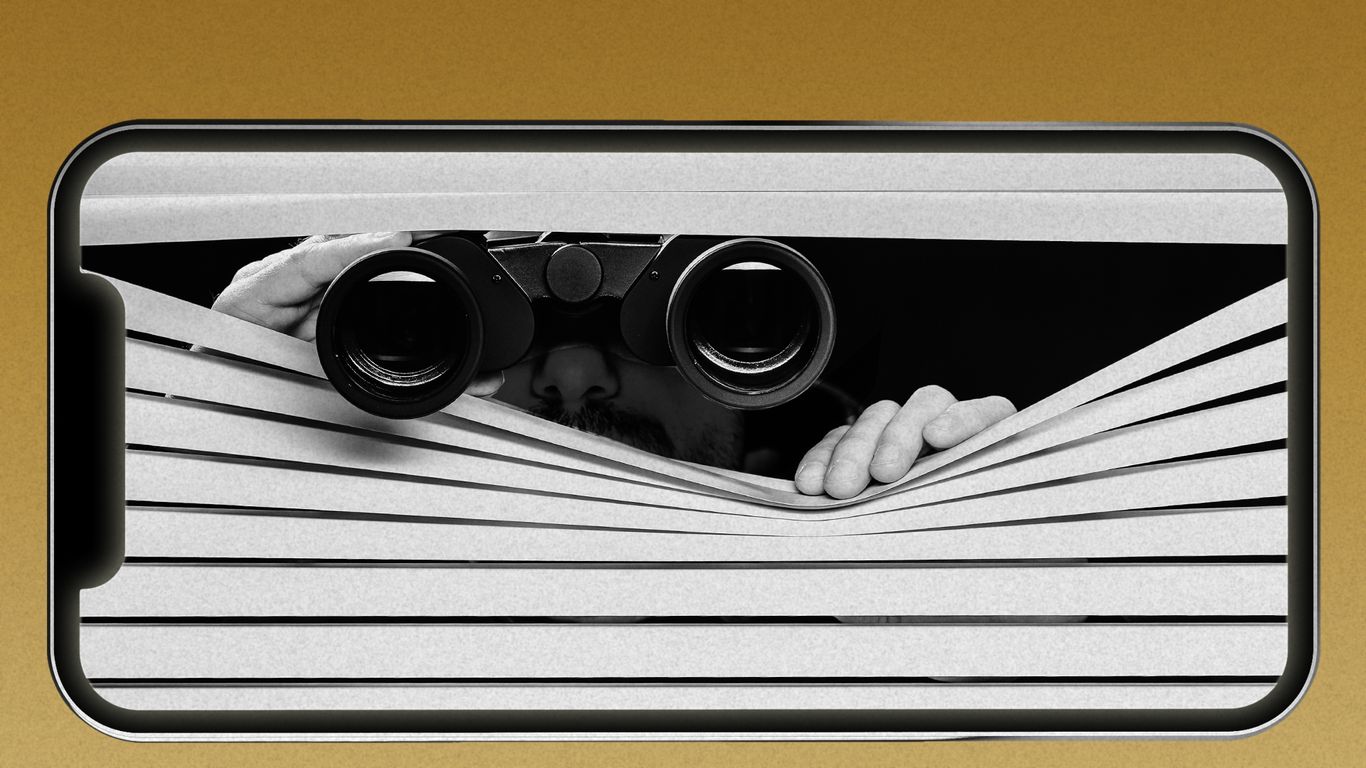
Perhaps the day's most chilling story emerged quietly in the technology press: government-grade spyware has entered the criminal market. The tools once reserved for state surveillance—sophisticated iPhone hacking kits with names like Coruna and DarkSword—now circulate among Chinese cybercriminal groups and Russian-based hacking operations. A tool built by the American defense contractor L3Harris for the U.S. government ended up in the hands of criminals who deployed it on fake crypto platforms. Another emerged on the servers alongside code so crudely written that low-level hackers could replicate it.
Apple has patched the vulnerabilities and released emergency updates. The company touts its security features and its commitment to user privacy. But the fundamental truth is stark: anyone's iPhone is now a potential vector for comprehensive surveillance. Your text messages in iMessage, WhatsApp, and Telegram. Your location data. Your contacts. Your browser history. All of it can be exfiltrated without your knowledge or consent, simply by visiting a malicious website. There is, as one researcher put it, "very little that you can do as a user even to detect it."
This represents a new phase in the long decline of digital privacy. Encryption was supposed to be a solution. Instead, the encryption was circumvented by exploiting flaws in the operating system itself. The cat-and-mouse game between defense and offense continues, but the mouse—the ordinary user—has effectively lost any meaningful agency. We are all, now, potentially surveil-able. The only question is whether those with the means to surveil us choose to do so. That is not security. It is the illusion of security maintained at the sufferance of actors we cannot see or control.
As Monday closes, the through-line becomes clear. Institutional consensus has broken down. Executive power asserts itself over democratic restraints. Global systems adapt to American disruption, but at the cost of creeping fragility. And in the digital sphere, the very technologies that promised liberation have become instruments of totalizing visibility. We are left with a nation whose institutions Mueller embodied—serious, careful, lawful—giving way to something far more volatile. That is Mueller's true legacy: not a life well-lived in service of the law, but the recognition that such a life is increasingly impossible in the world his successors have inherited.