There is a peculiar democracy happening in Congress today, one that carries the unmistakable scent of institutional desperation mixed with opportunism. The House is poised to vote on a war powers resolution regarding Iran—a measure that would pass not because of unified conviction about constitutional limits on executive authority, but because of mechanical advantages: a Democratic holdout in Maine has finally relented, a retiring Republican from Nebraska feels sufficiently removed from political consequence to follow his conscience, and absences have been minimized through careful legislative choreography. The symbolism is instructive. When constitutional governance depends on such fragile alignment of personal calculation and procedural timing, when a vote that should reflect serious deliberation instead requires the careful engineering of attendance sheets, we are witnessing not democracy at its best but democracy adapting to its own dysfunction.
The context deepens the discomfort. Last week's vote tied at 212 to 212, a mirror image that could only occur in a legislature so evenly divided that the absence of even a handful of members becomes dispositive. Republican leadership delayed the vote, recognizing that what was about to fail might soon succeed. This is not statecraft. This is not even politics in its traditional sense, where competing visions of national interest clash in real debate. This is choreography masquerading as governance—the careful staging of appearances to generate outcomes that appear more legitimate than their mechanics justify.
Yet beneath this procedural theatre lies a genuine constitutional question that deserves the seriousness it is not receiving. President Trump's administration has been conducting military operations in Iran for more than sixty days without explicit congressional authorization. The War Powers Act of 1973, that creaky artifact of post-Vietnam reckoning, stipulates that the president must terminate such operations if Congress does not declare war within that window. It is a compromise born from an earlier era of institutional struggle, imperfect and routinely tested. Today's vote, should it pass, would be largely symbolic—Trump will veto it, as he has telegraphed. But symbolism in constitutional matters is not negligible. It represents an assertion, however muted, that Congress still believes it possesses authority worth asserting.
The Exhaustion of Constitutional Leverage
What strikes the careful observer is not the existence of the war powers debate itself, but the pathetic inadequacy of the mechanism through which it unfolds. Congress designed the War Powers Act to be its reclamation of authority carelessly surrendered to the executive. Yet fifty years later, it remains a tool of protest rather than governance. Presidents ignore it or navigate around it. Congressional majorities invoke it only when political cover is available. Rep. Jim Himes, the ranking Democrat on the House Intelligence Committee, expressed feeling "pretty good" about Thursday's vote—an astonishing characterization of what should be a grave deliberation about war and peace.
Rep. Don Bacon, the Nebraska Republican preparing to support the resolution despite his interventionist leanings, articulated the genuine tension. He acknowledged that Trump "needs more authorities to use force" while feeling "very split" about the vote. Bacon's candor reveals what the procedural narrative obscures: there is no consensus about what the constitution demands, what prudence requires, or what the balance between presidential flexibility and congressional oversight should be in an age of rapid-response military threats. Instead, there are individual calculations of political safety, personal conscience, and institutional loyalty, all operating simultaneously and often contradictorily.
The absence problem itself deserves scrutiny. Twenty House members failed to show for Wednesday afternoon votes. On the side of the resolution's supporters, this represented failure of party discipline at a crucial moment. From the perspective of those opposing it, strategic absence is a form of protest—a way to register objection without accountability. That such tactics matter more than the substance being voted upon says something devastating about contemporary congressional function. It suggests that even when members care enough to take sides, the institutional architecture cannot reliably translate that care into meaningful action.
The Privatization of Constitutional Protection
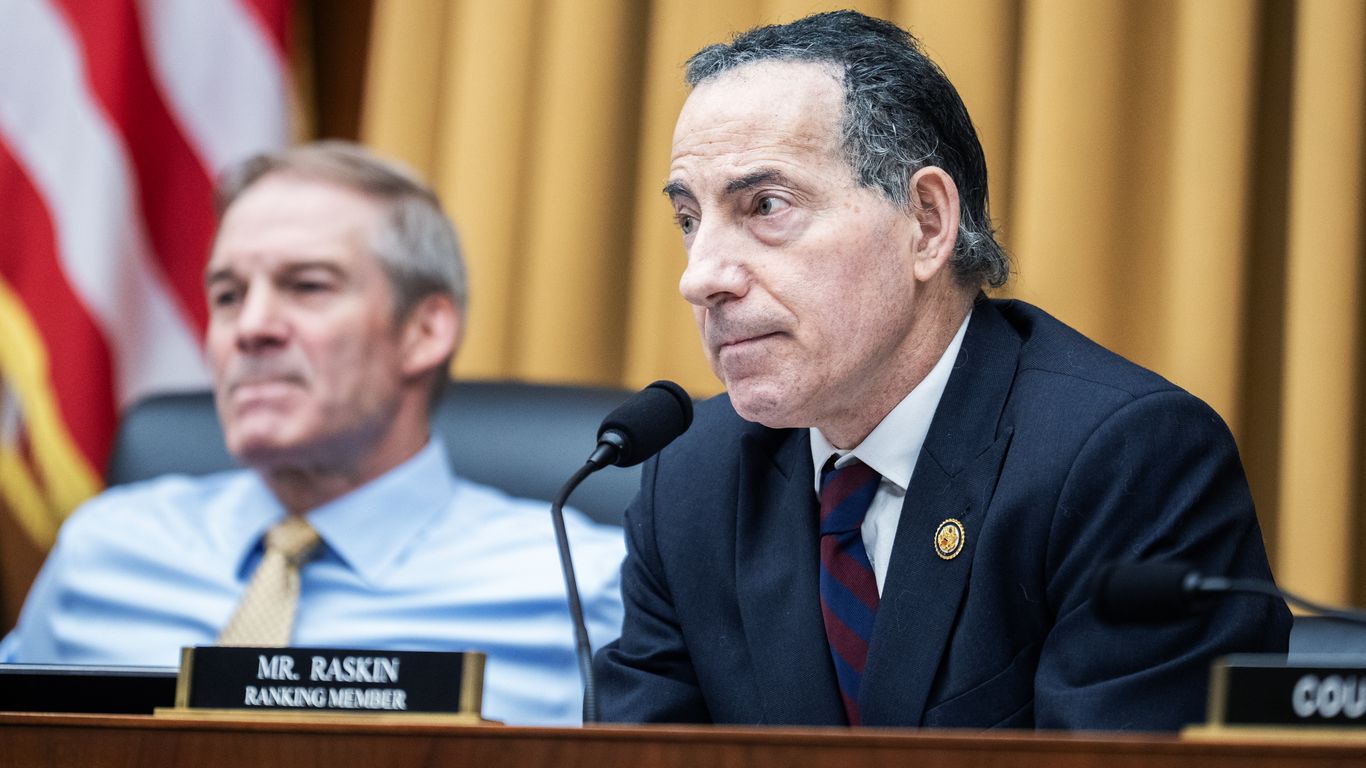
A second story emerging from today's news cycle deserves equal attention: the battle over the Trump administration's $1.8 billion "Anti-Weaponization Fund." Here again, we see constitutionalism being fought not through institutional assertion but through insurgent resistance—in this case, Democrats attempting to starve a fund created through executive settlement before it can distribute a dollar. Rep. Jamie Raskin's legislation to block the fund, coupled with Republican Brian Fitzpatrick's commitment to "try to kill" it, represents an unusual coalition built on constitutional principle rather than party interest.
Yet this too reveals deeper institutional exhaustion. The fund itself emerged from Trump's settlement with the IRS over the leaking of his tax returns—a civil dispute weaponized (if one accepts the administration's framing) into a mechanism for compensating perceived victims of "lawfare." That concept itself—the notion that prosecutions can be categorically defined as politically motivated and compensable—represents a stunning inversion of traditional constitutional limits on executive power. The president is not merely exercising clemency or mercy, traditionally legitimate executive prerogatives. Rather, through the settlement mechanism and subsequent fund creation, the executive has effectively established itself as arbiter of which prosecutions were legitimate and which constitute compensable injury.
The horror that should unite Congress here is the precedent: if Trump can create a fund to compensate his supporters for prosecutions he deems political, what prevents a future Democratic administration from establishing a parallel mechanism for a different vision of victimhood? Yet instead of united horror, we see partisan calculation. Democrats rush to kill it through discharge petition if necessary; some Republicans see constitutional merit in the effort. The $1.8 billion is significant, but less significant than what it represents—an executive asserting a novel form of power that Congress neither clearly authorized nor effectively prohibited.
The Absent Crisis: American Recession Risk
Buried beneath constitutional sparring and political theater sits a quietly alarming economic warning. Moody's chief economist Mark Zandi estimates a forty percent chance of recession within the coming year, well above historical norms. The stock market continues climbing despite corporate earnings that show weakness and consumer confidence that remains fragile. This is not the top news story, precisely because it lacks the immediate political drama of war powers votes or constitutional fund disputes. Yet it may matter more profoundly to American life and, by extension, to the ability of any political system to function effectively.
Recessions test institutional stability. They generate the economic anxiety that fuels both justified grievance and destructive scapegoating. They create demands on government at precisely the moment when government capacity appears most strained. The same Congress wrestling with war powers and constitutional limits will be expected to manage economic crisis should the forecasts prove prescient. It is not obvious that our fractured, procedure-addicted, symbolically-oriented legislative body is equal to that task.
What Endures in the Wreckage
The through-line connecting today's stories is institutional decay masked by procedural continuity. Congress still votes. The mechanisms of democracy still function. But the coherence has drained away. We have a system where war authorization depends on strategic absence, constitutional protection requires insurgent opposition across party lines, and economic warning signs receive less attention than political theater because they lack narrative drama.
Perhaps this has always been so. Perhaps institutional exhaustion is simply democracy showing its ordinary face. Or perhaps we are witnessing the specific pathology of an era when parties are so evenly balanced and so sorted by ideology that nothing can pass except through strategic accident or bipartisan recognition of crisis so obvious it cannot be ignored. Today's vote, should it pass, will be a small reassertion of congressional dignity. It will also be precisely what it appears to be: a symbolic gesture, meaningful chiefly in demonstrating how much meaningful action has become impossible. That recognition, uncomfortable as it is, deserves to be this moment's real headline.