Experts sound alarm after Supreme Court hands Trump 'sweeping seizure of election power'
Source: www.rawstory.com ·
Section: politics ·
Bias: Right
· Published: Mon, 24 Aug 2026 22:59:26 GMT
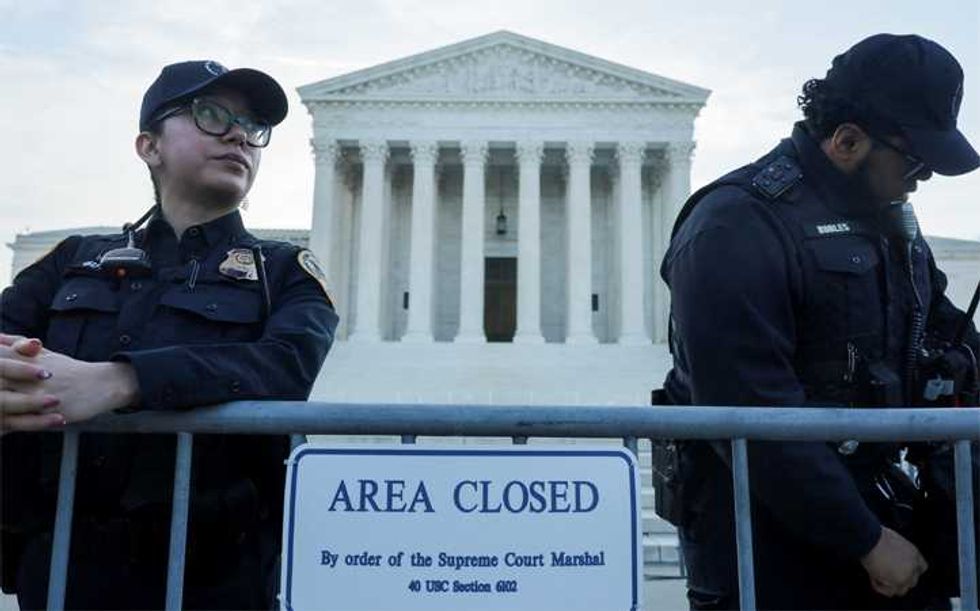
Legal experts raised chilling questions about the Supreme Court's latest ruling, which gave President Donald Trump's administration a temporary win in its crusade to restrict mail-in ballots. On Monday, the court lifted a lower court's injunction that prevented Trump's mail-in ballot executive order from being implemented. The order required the Postal Service to list voters who use mail-in ballots and told the Department of Homeland Security to create its own voter roll. The order is part of Trump's long-standing attacks against mail-in voting, which he has described as "fraud" despite having voted by mail in multiple recent Florida elections. David Becker, executive director of the Center for Election Innovation and Research, and Jessica Levinson, a law professor at Loyola University, raised chilling questions about the ruling on CNN's "The Lead." Becker argued that the order will be impossible to implement ahead of the midterms. Even so, it could still affect the election's outcome."There's no way to implement this," Becker said. "This would be a sweeping seizure of election power from the states. Under any circumstances. It would be hard to do this with two or four years of advance notice. It is impossible to do that with about 70 days of advance notice."Levinson argued that the Supreme Court's ruling left a lot undecided, but it also raised a few questions that remain open. "It's very typical in the sense that a lot of times the fighting over executive orders is initially all based on these procedural matters that we're talking about right now," she said. "Who has standing to sue? Can you bring the case? Do you have to wait for something to bring the case? And then later you get to the merits when it comes to the harms.""It's very unlikely that any rules will change prior to voting in November, and so when it comes to is this an emergency circumstance for the states, I think the answer at this point is 'no' because they won't be asked to change anything or forced to change anything," Levinson said. "I suspect ... the question becomes what to do next? And this is litigation that will absolutely continue. This is not the end of the case. Not by a long shot."
Read the full article at www.rawstory.com →
The same story across the political spectrum (15 sources)
← Back to FlashTopics.com