U.S. deploys B-1 bomber as attacks on Iran intensify
Source: www.axios.com ·
Section: politics ·
Bias: Center-Left
· Published: Thu, 23 Jul 2026 03:05:35 GMT
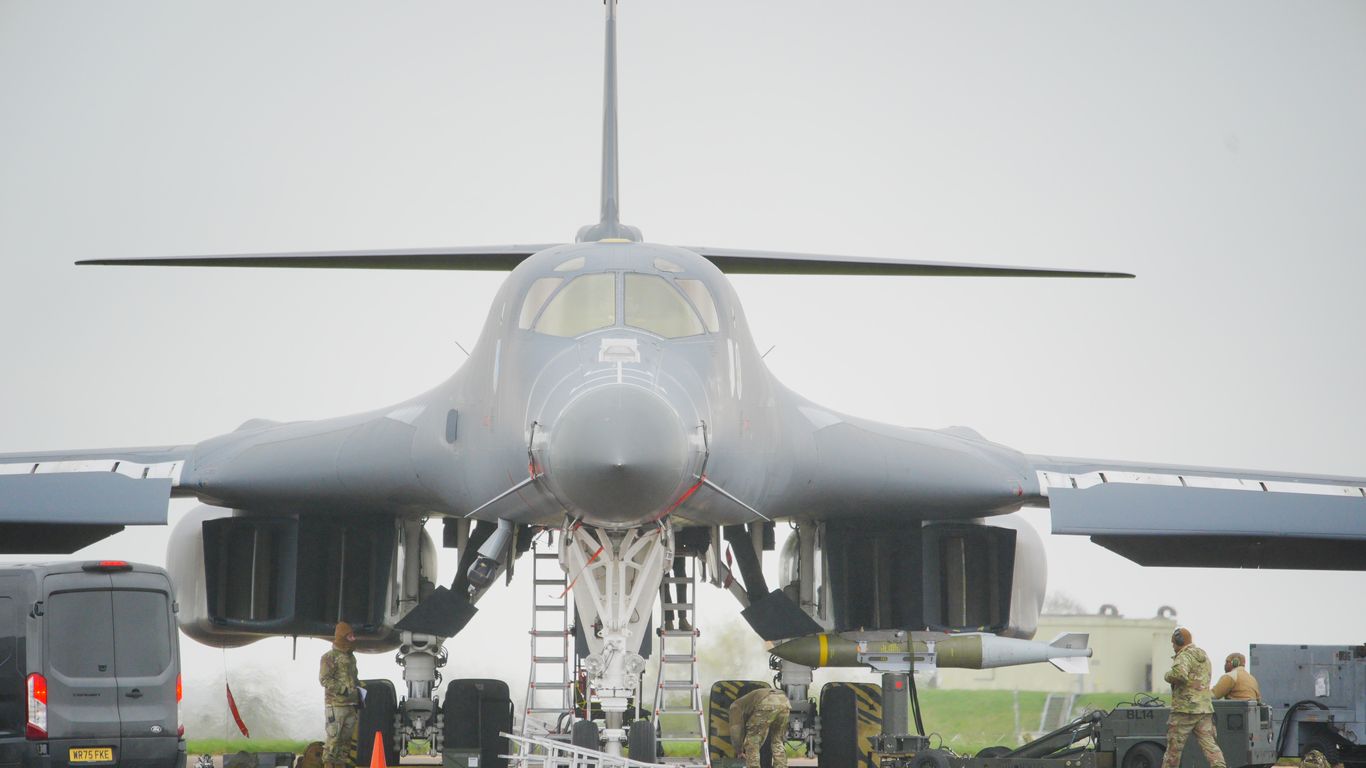
The U.S. military used a B-1 long-range bomber on Tuesday to strike Islamic Revolutionary Guard Corps targets in Iran, U.S. officials said. Why it matters: It was the first time the U.S. conducted a B-1 mission since fighting with Iran resumed 12 days ago. Using B-1 bombers, which can carry two dozen 2,000-lb. bombs or dozens of cruise missiles, signaled a significant escalation and expansion of the U.S. military campaign. The B-1 can fly faster than the speed of sound at low altitudes while carrying the largest bomb load of any type of bomber. Amid a continued U.S. military build up in the region, President Trump is still considering returning to major combat operations against Iran. U.S. and Israeli officials say this could happen within days. Driving the news: The B-1 launched its mission from an airbase in the UK and was spotted on online plane tracking websites. The U.S. Central Command (CENTCOM) didn't announce the B-1 mission in its statement on Tuesday about the strikes that day."CENTCOM assets targeted Iranian military operations centers, maritime capabilities, aircraft hangars, drone storage facilities, and military logistics infrastructure to further degrade Iran's ability to threaten commercial shipping in the Strait of Hormuz," the statement read.It's unclear what the B-1 attacked and whether the massive mission was more effective than other strikes over the last few days. The U.S. conducted several B-1 missions during Operation Epic Fury, hitting missile bases, command centers, weapons storage facilities and air defense systems. State of play: Despite the expansion of U.S. strikes, the Iranian regime hasn't seemed to change its position on the Strait of Hormuz. And it is still conducting attacks against U.S. bases in the region. Some U.S. defense officials say Iran's military capability around the Strait of Hormuz "is almost nonexistent," but others say Iran is still capable of attacking ships in the area. On Wednesday, President Trump threatened to bomb bridges and power plants, including in Tehran, if Iran attacks more ships in the Strait of Hormuz. Iran responded by threatening infrastructure in Gulf countries allied with the U.S. Zoom out: Also on Wednesday, Houthi rebels attacked Saudi ships for the first time since they announced a blockade on Saudi ports. A U.S. defense official said the Houthi attacks, after months of almost entirely staying out of the war, could be motivated by Iran. The official said Iran wants to use the Houthis to create a new front in the Red Sea in addition to the Gulf, and to create pressure on another critical international oil shipping route.Several commercial vessels transiting through the Red Sea were seen changing course on Wednesday to avoid passing through the Bab el-Mandeb Strait, fearing Houthi attacks. What to watch: U.S. officials said Qatari mediators are still talking to U.S., Iranian and Omani officials to try to reach a new deal to reopen the Strait of Hormuz and stop the fighting, according to sources with knowledge. One regional source said Iranian leadership hasn't accepted the latest proposal put forward by the mediators. It's unclear how long Trump will give the diplomatic efforts. "They're getting hit so hard, and they want to make a deal," Trump said in a speech in Georgia Wednesday night."But I say they're not ready to make a deal because every time they make a deal they want to change it and everything. They're not ready. They will be ready very soon."
Read the full article at www.axios.com →
The same story across the political spectrum (15 sources)
← Back to FlashTopics.com